
Sub-Total: $0.00
Leadership Through Another Lens
Learning Leadership Through Different Perspectives with Jennifer Kozel, MSHRM, SPHR
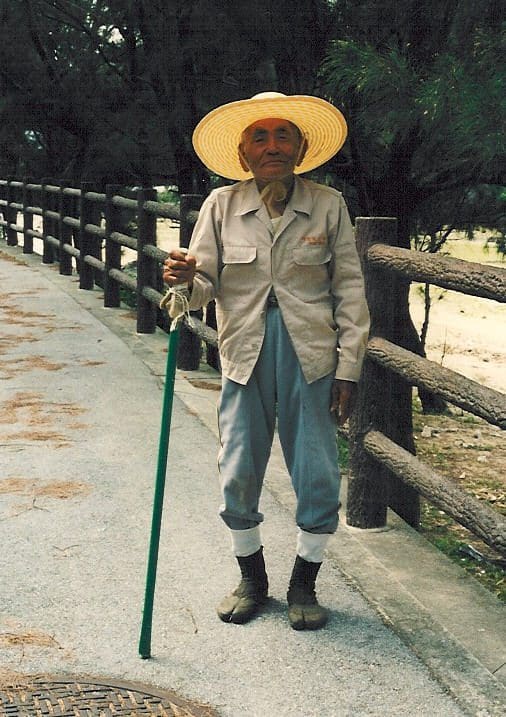
In 1995, while serving in the U.S. Navy and stationed on the island of Okinawa, I often crossed paths with an old farmer. He walked with a bow in his legs, leaned on a green cane, and wore a wide straw hat to shield himself from the hot tropical sun. His life was not easy—he harvested sugarcane, labored long hours, and bore the visible wear of time and toil.
He was missing several teeth, but that never stopped him from smiling at me.
My Reflection
Looking back at the photo I took of this man, I realize that grin carried far more weight than I fully understood at the time.
This man had likely survived the Battle of Okinawa in 1945—one of the bloodiest conflicts of WWII, where civilians endured unthinkable loss. He carried that history in his bones, and yet, when he looked at me—a female American sailor —he chose grace.
At 24 years old, I was also navigating layers of scrutiny: as a woman in uniform, as an American living among a community where memories of the war still lingered, and as a horsewoman teaching horsemanship in a culture with its own traditions and hierarchies. I even felt the shadow of the Yakuza, who viewed my work with Okinawan farmers as a threat to their authority. Like the farmer, I knew what it meant to be watched closely, to be measured, to be doubted.
In many ways, he and I had more in common than either of us realized. We both knew what it meant to persevere under circumstances not of our choosing. We both knew what it meant to show up each day with commitment, dignity, and determination. And in the smallest gesture—a smile across the divide—we both chose connection over suspicion.
This picture continues to remind me of a lesson that has shaped me as a leader and coach:
True leadership is about perspective.
It’s about recognizing that everyone you meet carries unseen stories, battles, and resilience within them. You can view people through the lens of judgment, history, or difference—or you can widen the lens and meet them with grace.
When we choose grace, we build trust where none seems possible. We create bridges where walls once stood. And we demonstrate the quiet strength that leadership requires: the ability to see beyond ourselves.
The old farmer of Okinawa taught me that leadership is not found in titles, authority, or expertise. It’s found in how we choose to see and honor one another—even across divides. That choice, simple and profound, is what creates lasting impact and legacy.
Author’s Note:
This reflection is part of the lived experiences that have shaped my approach as an HR leader and executive coach. Leadership is not forged only in boardrooms or classrooms, but also in unexpected moments that test our perspective and grit. Today, I help leaders and teams uncover those same lessons—choosing clarity, courage, and grace as the foundation for growth and transformation.
Personal Reflection Prompts
- When was the last time you chose grace over judgment in a difficult situation? How did it shift the outcome?
- Think of a time you were seen only for your “label” (role, nationality, gender, title). How did it feel, and how did you rise above it?
- Who in your life has taught you resilience not through words, but through presence or example?
Leadership Perspective Prompts
- As a leader, do you see your team through the lens of history and assumptions, or through the lens of potential and humanity?
- What’s one “smile” (small gesture of grace) you can offer today to build trust across a divide?
- What hidden battles might your team members be carrying that you haven’t considered?
- If someone were to capture a candid photo of you leading, what would your stance, expression, or presence communicate about your leadership?
Coaching / Growth Prompts
- What personal history shapes the way you show up in your professional life today?
- Where are you still holding on to judgment from the past that could be released with a shift in perspective?
- What legacy do you want to leave—not in achievements, but in how people remember the way you treated them?
