Sub-Total: $0.00
Feeling Overfaced? Backup and Change Your Approach for Success
Leadership Lesson from the Arena with Jennifer Kozel
If you’re not a horse person, you may not have heard the term overfaced. But in the equestrian world, it’s a word used across disciplines.
Being overfaced means presenting a horse with a task—like a jump, a new exercise, or an unfamiliar environment—that exceeds their readiness or immediate capacity. It often leads to hesitation, refusal, or diminished performance. In essence, it’s asking too much too soon, which can erode a horse’s confidence and willingness to try.
Application of a metaphor
I reflected on being overfaced today while riding my pony, Buddy. It struck me how applicable this concept is to the workplace—especially for managers who, often unknowingly, pile on tasks, launch new systems, or change processes without preparing their team to be successful. The result? Employees may become overwhelmed, disengaged, or underperform—not because they aren’t capable, but because they’ve been overfaced.
Buddy has been out of consistent work for several months due to saddle fit issues. Even so, he always gives his best effort. Sometimes I didn’t even realize he was uncomfortable until I saw skin irritation after the ride. I’d pause training until new tack arrived that might help.
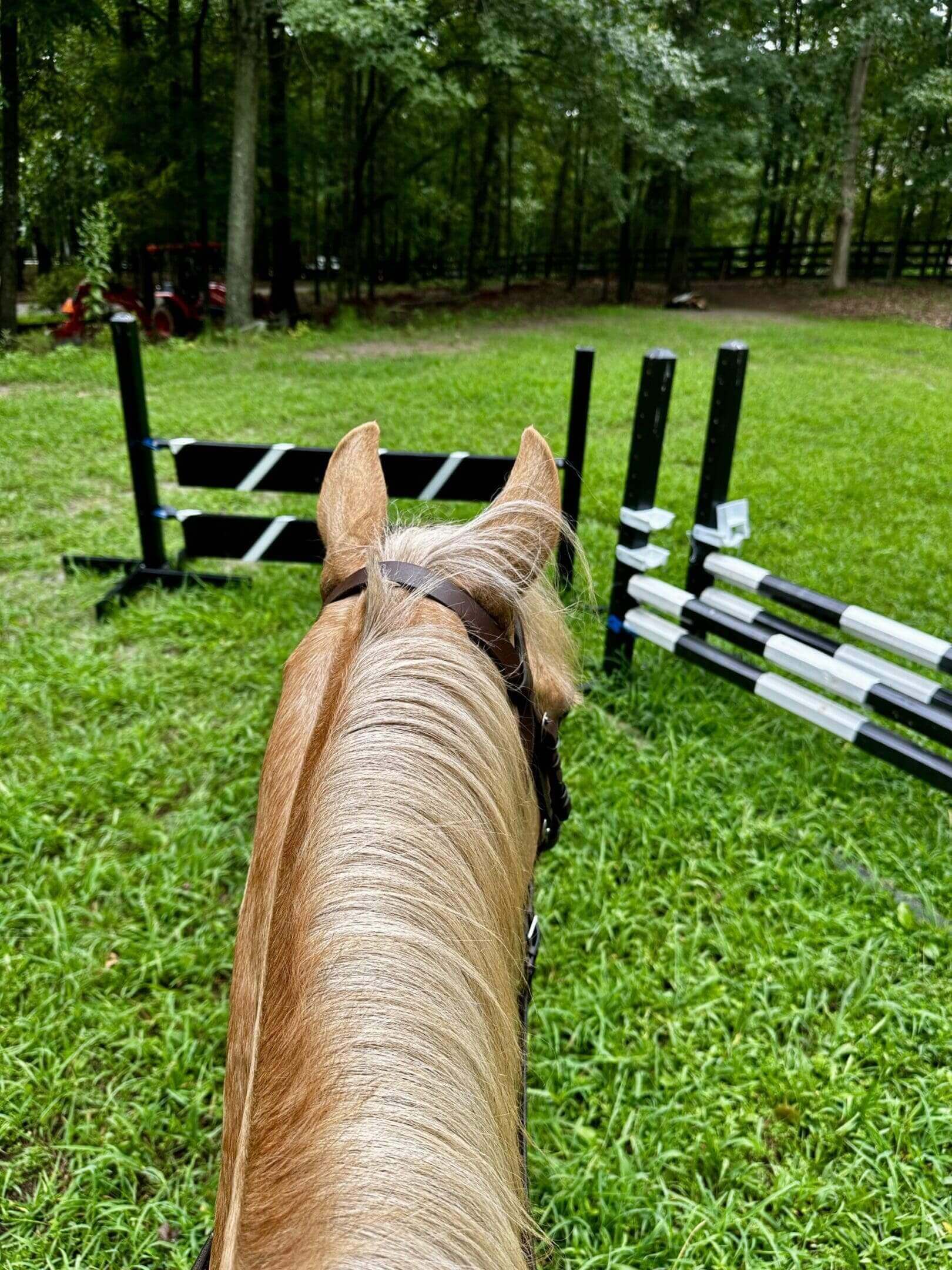
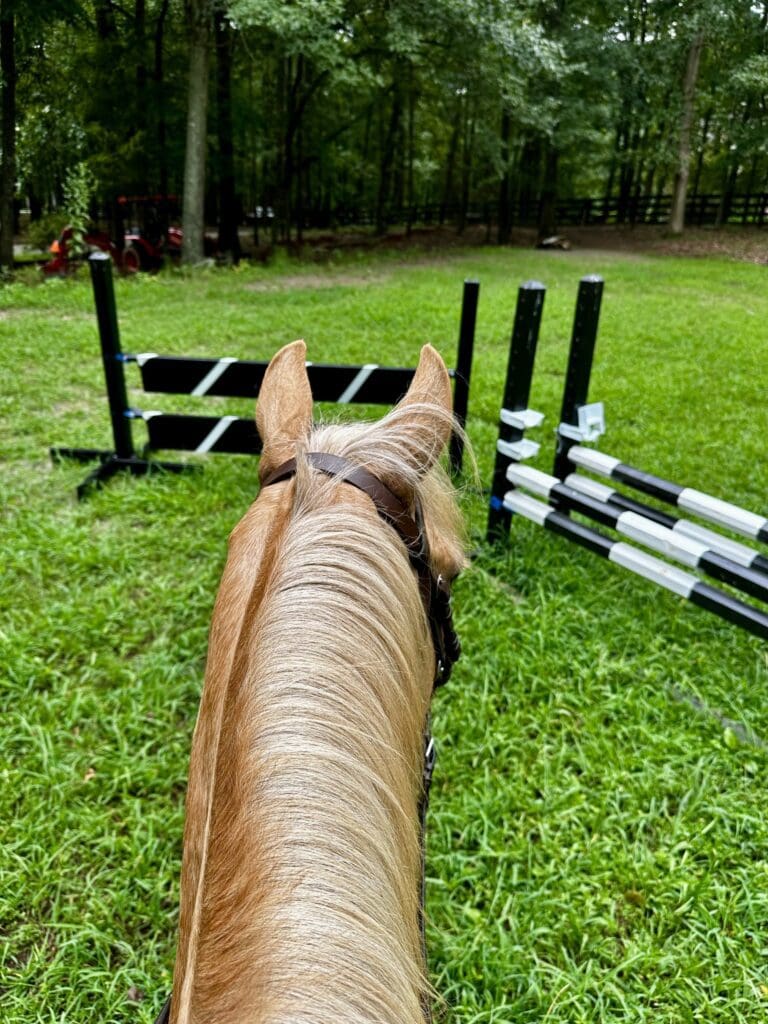
Today, I rode him in a new custom girth (it’s what holds the saddle on) that fit like a glove. Delighted by how comfortable he felt, I introduced some jumping exercises. He moved with enthusiasm and confidence—until we approached a vertical jump with angled chevrons. He tensed. I supported him with my leg, and he jumped it, though hesitantly.
On the second approach, he knocked the top rail down, and I could feel his self-doubt creep in. So, I redirected him to a smaller, familiar jump—one he cleared with ease. His confidence returned. We approached the chevron fence again from a new angle, and he cleared it smoothly. Then we returned to the original direction, and this time, he jumped it with power and grace. I ended the session there—lots of pats, praise, and horse cookies.
Why share this on a business site? Because overfacing happens in leadership too. And just like horses, people thrive when we build confidence gradually, not by throwing them into high-pressure situations unprepared.
If you notice someone on your team is hesitating, underperforming, or disengaging, ask yourself:
- Did they have success-building experiences leading up to this challenge?
- Were their earlier wins recognized and celebrated?
- Could they be feeling overfaced and discouraged?
If so, try taking a step back. Revisit something they’ve mastered before. Let them rebuild momentum. Shift the angle, change the approach. Once confidence returns, you can raise the bar—without losing their trust, energy, or motivation.
Reflection Prompts:
- Where might you have been inconsistent in your leadership? Could that inconsistency have eroded your team’s capacity to perform well?
- Who on your team might be overfaced right now? What’s a small win you could help them achieve to rebuild confidence?
- What paradigm shift, perspective, or angle can you show your team to help them see their obstacles in a different light? How can you make those obstacles more manageable in their eyes?
Inspiration:
Today’s ride with my pony, Buddy 🐴
