
A research-informed guide to coaching, learning, leadership development, and ethical practice
When people hear the words equine-assisted, they often picture therapeutic riding. Yet a growing body of human-development work happens entirely on the ground.
In equine-guided coaching and equine-assisted learning, participants may observe a herd, lead a horse, navigate an obstacle, establish a boundary, or complete a collaborative task. The goal is not horsemanship. The purpose is to create an experience in which communication, presence, adaptability, emotional regulation, and relationship patterns become easier to notice.
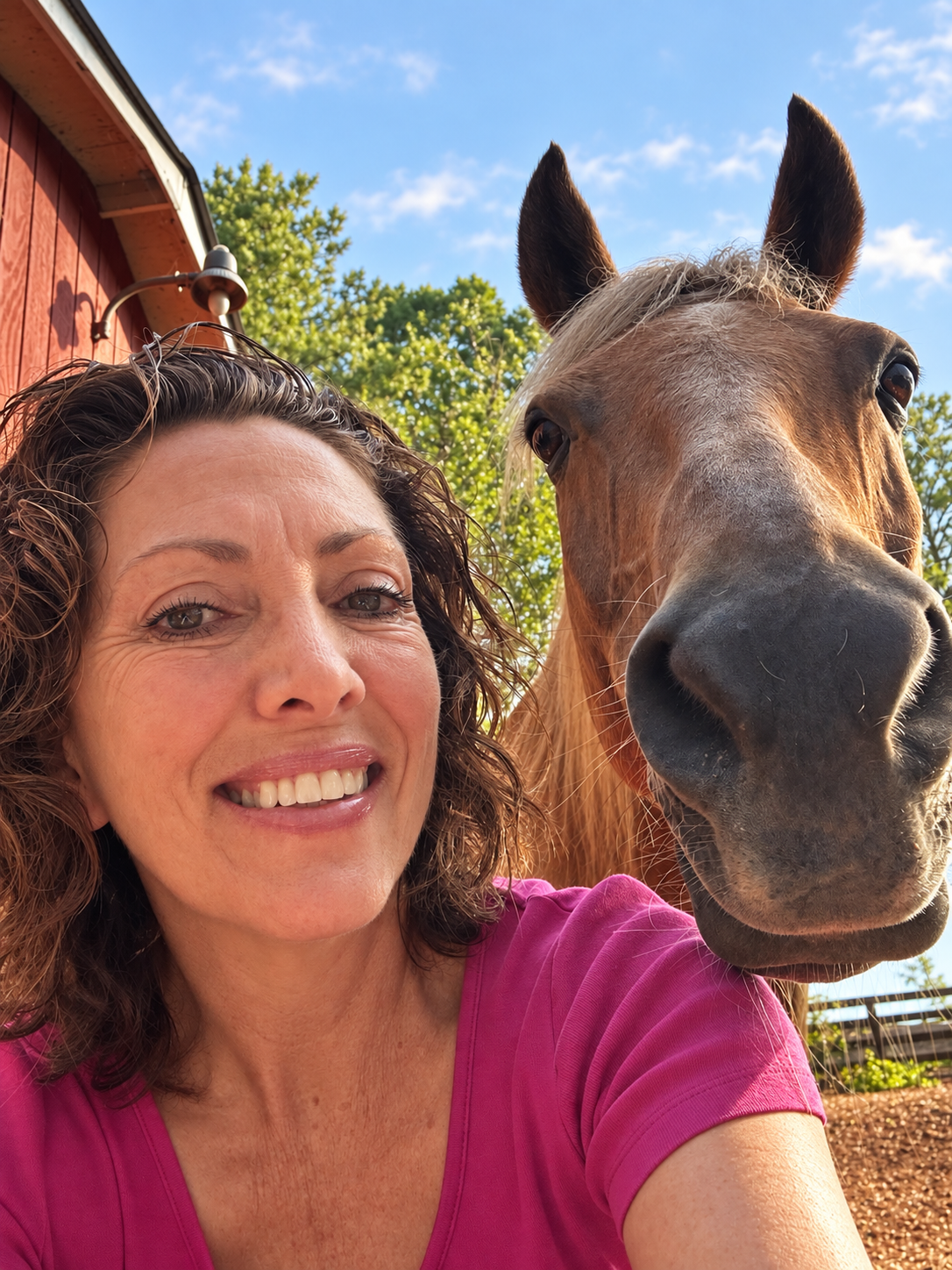
As an executive coach and longtime horsewoman, I have seen how quickly a concept can move from intellectual understanding to lived awareness when a horse enters the learning environment. I have also seen why this work deserves disciplined language. Horses are neither props nor mystical mind readers. Equine-guided coaching is not psychotherapy. And promising research should never be presented as proof beyond what the evidence can support.
So, what does the science actually tell us?
The most responsible answer is encouraging and still evolving. Research suggests that structured equine-assisted experiences may support reflection, emotional awareness, communication, experiential learning, and leadership development. The evidence base remains limited by small samples, varying program models, inconsistent terminology, self-reported outcomes, and relatively few controlled or long-term studies.
That nuance matters. It gives us a clearer trail to follow.
Why the learning can feel different
Most leadership development relies heavily on language. We discuss communication, analyze behavior, and talk through workplace challenges. Those approaches are valuable. Equine-guided work adds another layer: experience before explanation.
A participant may intend to communicate confidence, clarity, or calm. The interaction provides information about what is happening in that moment. The participant can adjust position, energy, attention, timing, boundaries, or strategy and observe what changes.
The horse's response is information within a specific interaction, not a diagnosis or an objective verdict about someone's character. A skilled facilitator helps the participant remain curious, generate possible interpretations, and connect the experience to a relevant leadership or life context.
Act. Observe. Adjust. Experience the result. Reflect. Try again.
This process is consistent with experiential-learning theory. A 2021 review of equine-assisted leadership development described the field as a developing application of experiential learning and identified potential leadership-related benefits, while also calling for more empirical research (Bilginoğlu, 2021).
The distinction is important. Participants move beyond discussing how they lead and begin noticing what they do when clarity is missing, uncertainty rises, or their first strategy fails.
Questions often surface naturally:
- Am I communicating a clear intention?
- What happens in my body when I become frustrated?
- Do I push harder when my approach is not working?
- Can I read subtle feedback before it becomes resistance?
- Do I confuse hesitation with patience?
- Can I adjust without abandoning the outcome?
- How does my presence affect the relationship?
These are leadership questions. The horse helps make them visible.
What research suggests about emotional experience
One controlled study examined 92 adults, with 46 participating in a two-hour horse-assisted coaching session and 46 serving as a comparison group. Participants in the coaching group reported increased positive affect and decreased negative affect following the session (Schütz & Schmitz, 2021).
This result supports a modest conclusion: a structured horse-assisted coaching experience may influence participants' immediate emotional state. The study did not establish that one session creates lasting change or treats anxiety, depression, or another mental-health condition. The authors themselves recommended longer-term research and additional measurement points.
A small 2025 pilot study followed 20 women, with and without fibromyalgia, during an equine-coaching program. The researchers reported improvements on measures related to depression, anxiety, and general psychological health (Rodríguez-Sobrino & Melguizo-Garín, 2025). Because the study was small and exploratory, its findings should be treated as an early signal rather than evidence of clinical effectiveness.
Taken together, these studies suggest that emotional awareness and short-term psychoemotional well-being warrant further investigation. They do not justify positioning coaching as treatment.
Learning through ambiguity, adjustment, and reflection
Leadership rarely unfolds under perfectly controlled conditions. Leaders act with incomplete information, competing demands, and people who may not respond as expected. The ability to stay present, interpret feedback, and adjust is central to effective leadership.
That is one reason a study of 60 occupational therapy students is relevant beyond its educational setting. Following an equine-assisted experiential-learning activity, students showed a statistically significant improvement in self-reported tolerance for ambiguity. They also perceived improvement in problem-solving, activity analysis, communication, and reflection (Murphy, Wilson, & Greenberg, 2017).
The study used a pretest-posttest design without a control group, so it cannot tell us whether the horse-based experience outperformed another form of experiential education. It does, however, illustrate a credible mechanism: an unfamiliar, responsive environment can require learners to observe, make meaning, test an approach, and adapt in real time.
In another study, candidates preparing for school-system leadership participated in equine-assisted learning and reflected on their leadership traits, beliefs, boundaries, and assumptions about systems leadership (Williams, 2021). The findings help explain why equine experiences can feel memorable and personally relevant, while the qualitative design means they should not be read as proof of improved job performance.
What the leadership research can and cannot claim
Leadership development is among the most compelling applications of non-mounted equine work, and the empirical research is still relatively young.
A 2025 qualitative study followed eight leaders who completed a five-day equine-assisted leadership-development program. Interviews conducted across a year produced themes related to embodied self-awareness, reflection, trust, relational leadership, and perceived behavioral change in the workplace (Sivagurunathan et al., 2025). The longitudinal follow-up adds value because it examines how participants understood the experience after returning to work. The small sample and reliance on participants' accounts limit how broadly the findings can be generalized.
This is the distinction leaders and buyers of development programs should understand:
Research does not yet establish that equine-guided coaching reliably produces better leaders or superior business outcomes. It does support the idea that equine-assisted experiences can create a vivid environment for self-observation, reflection, and behavioral experimentation.
That is a meaningful contribution. A horse is unaffected by title, résumé, organizational authority, or a polished explanation. The interaction brings attention to behavior in the present moment. When the expected result does not occur, the participant has an immediate choice: apply more of the same behavior or become curious enough to try something different.
That moment is often the Growth Edge. It is the point where a familiar strength or strategy stops producing the desired impact and a new choice becomes possible.
Coaching, learning, and therapy are different services
The language across the equine-assisted field can be confusing. Equine-assisted psychotherapy, equine-assisted learning, equine-guided coaching, therapeutic riding, and hippotherapy may all involve horses, yet they differ in purpose, provider qualifications, participants, activities, and intended outcomes.
For clarity:
- Equine-guided coaching focuses on personal or professional development, goals, awareness, choices, and forward movement. Executive applications may include leadership presence, communication, influence, adaptability, boundaries, team dynamics, and behavioral impact.
- Equine-assisted learning uses structured experiential activities to support educational, organizational, or developmental objectives. It may be offered to individuals or groups in settings such as leadership development, professional education, or youth programming.
- Equine-assisted psychotherapy or counseling addresses mental-health concerns within a clinical relationship and should be delivered by appropriately licensed mental-health professionals working within their scope of practice.
- Hippotherapy is a clinical intervention delivered by qualified occupational therapy, physical therapy, or speech-language professionals who use equine movement as part of a treatment plan.
- Therapeutic or adaptive riding teaches riding and horsemanship with adaptations intended to support people with disabilities. It is distinct from psychotherapy and hippotherapy.
A coaching or leadership program should not diagnose or treat trauma, depression, anxiety disorders, substance-use disorders, or other clinical conditions. If a participant's needs extend beyond coaching, an ethical practitioner pauses, refers, or collaborates with an appropriately qualified professional. The precise requirements governing titles and services vary by jurisdiction, so providers should consult applicable licensing rules and qualified legal counsel.
This distinction also affects how research is used. Findings from a therapeutic program with adolescents, people receiving substance-use treatment, or another clinical population cannot automatically be generalized to executives participating in leadership coaching.
For example, a community-based case study involving First Nations female youth receiving treatment for volatile-substance misuse described ways an equine-assisted learning program contributed to biological, psychological, social, and spiritual dimensions of well-being (Adams et al., 2015). The study offers important insight into that program, population, and cultural context. It should not be used as evidence that an executive retreat will produce the same outcomes.
Clear boundaries protect participants, practitioners, and the credibility of the field.
An emerging question: what happens within the relationship?
Researchers are beginning to explore more than whether participants report improvement. They are also examining how human-horse interaction unfolds over time.
A 2026 exploratory study followed 11 formerly incarcerated men with histories of substance abuse through a 12-week equine-assisted coaching program. At the group level, changes in anger regulation and quality of life were not statistically significant. Individual patterns varied, and researchers also observed changes in human-horse synchrony and monitored equine behavior (Griffioen, Haven-Pross, & Verkuil, 2026).
The absence of a clear group-level effect is important. Responsible science includes findings that complicate the story. This small study cannot establish effectiveness, but it points toward richer future questions about individual response, relationship, attunement, and the conditions under which change may occur.
The horse's experience is part of the evidence
Ethical equine-guided work must consider both members of the interaction.
A horse is a sentient partner with preferences, thresholds, social needs, and the capacity to experience stress. Ground-based work is not automatically low-stress, and an activity that appears gentle to a person may not feel comfortable to every horse.
A 2021 scoping review examined 45 studies of human-horse interaction and found substantial variation in how equine behavior, physiology, and welfare were measured. The authors concluded that stronger, more standardized research is needed to connect measures of horse response with sound welfare conclusions (Kelly, McDuffee, & Mears, 2021).
A 2024 preliminary study of 14 horses interacting with 56 people compared common unmounted activities. The horses displayed greater sympathetic activation and more stress-associated behaviors during grooming than during leading and maze activities (Rudd et al., 2024). That result challenges an easy human assumption: because we experience grooming as affectionate or calming, the horse must experience it the same way.
Ethical practice requires more than preventing obvious harm. It calls for knowledgeable observation, appropriate horse selection, thoughtful workload and rest, attention to environmental and social needs, and meaningful choice whenever practicable. It also requires the humility to stop or change an activity when the horse communicates discomfort or disengagement.
At The Gravara Group, the horse's response is never treated as a definitive reading of a participant. It is part of a living interaction. We honor what the horse communicates while helping the participant explore their own experience without forcing a predetermined interpretation.
What to look for in an equine-guided program
For an executive, HR leader, or organization considering this work, the quality of facilitation matters as much as the presence of horses. Ask:
- Is the purpose of the program clearly identified as coaching, learning, therapy, or another service?
- Do the facilitators have credible qualifications relevant to both the human-development goal and equine safety?
- Can they explain the boundaries of their practice and their referral process?
- Are claims about outcomes proportional to the available evidence?
- How are insight and experience translated into workplace action?
- How are physical safety, emotional safety, accessibility, and informed consent addressed?
- How are equine choice, workload, behavior, and welfare monitored?
- What happens when a participant or horse needs to pause or opt out?
A thoughtful program should welcome these questions.
Where the science leaves us
The research does not support sweeping promises. It supports a more grounded and useful conclusion:
Well-designed equine-guided coaching and learning may provide a powerful setting for embodied self-observation, reflection, communication practice, and behavioral experimentation. Stronger controlled research is still needed to determine which approaches work best, for whom, under what conditions, and for how long.
I find that conclusion compelling because meaningful leadership development rarely begins with certainty. It begins with the willingness to notice.
With a horse, a leader may discover the gap between intention and impact in a way that is immediate, physical, and difficult to explain away. The invitation is then to stay present, become curious, and make a different choice.
That is The Leadership Work Beneath The Leadership Work™.
And that is where clarity, courage, and growth can begin.
References
- Adams, C., Arratoon, C., Boucher, J., Cartier, G., Chalmers, D., Dell, C. A., Dell, D., Dryka, D., Duncan, R., Dunn, K., Hopkins, C., Longclaws, L., MacKinnon, T., Sauve, E., Spence, S., & Wuttunee, M. (2015). The helping horse: How equine assisted learning contributes to the wellbeing of First Nations youth in treatment for volatile substance misuse. Human-Animal Interaction Bulletin, 1(1), 52-75. https://doi.org/10.1079/hai.2015.0005
- Bilginoğlu, E. (2021). Equine-assisted experiential learning on leadership development. International Journal of Organizational Leadership, 10(Special Issue), 3-16. https://doi.org/10.33844/ijol.2021.60532
- Griffioen, R. E., Haven-Pross, S. C., & Verkuil, H. (2026). Equine-assisted coaching in formerly incarcerated men with histories of substance abuse: A 12-week exploratory study of anger regulation, quality of life, human-horse synchrony, and equine behavior. Frontiers in Psychology, 17, 1832096. https://doi.org/10.3389/fpsyg.2026.1832096
- Kelly, K. J., McDuffee, L. A., & Mears, K. (2021). The effect of human-horse interactions on equine behaviour, physiology, and welfare: A scoping review. Animals, 11(10), 2782. https://doi.org/10.3390/ani11102782
- Murphy, L., Wilson, J., & Greenberg, S. (2017). Equine-assisted experiential learning in occupational therapy education. Journal of Experiential Education, 40(4), 366-376. https://doi.org/10.1177/1053825917712732
- Rodríguez-Sobrino, N., & Melguizo-Garín, A. (2025). Effects of equine coaching on psychoemotional wellbeing: A pilot study in women with and without fibromyalgia. Healthcare, 13(21), 2696. https://doi.org/10.3390/healthcare13212696
- Rudd, C., Pasiuk, E. L., Anderson, N. C., Hall, N., Foster, R., & Schroeder, K. (2024). A preliminary assessment of equine affect in equine-assisted services. Anthrozoös, 37(3), 501-518. https://doi.org/10.1080/08927936.2024.2333163
- Schütz, K., & Schmitz, C. (2021). Positive and negative effects in horse-assisted coachings. Coaching | Theorie & Praxis. https://doi.org/10.1365/s40896-021-00052-6
- Sivagurunathan, R., Senathirajah, A. R. B. S., Haque, R., Nadarajan, D., & Abdul Hamid, H. (2025). Equine-assisted learning and leadership transformation: An exploratory qualitative study of workplace behavior. Frontiers in Veterinary Science, 12, 1700029. https://doi.org/10.3389/fvets.2025.1700029
- Williams, H. P. (2021). Horses preparing superintendent candidates for the leadership arena. Journal of Experiential Education, 44(1), 84-96. https://doi.org/10.1177/1053825920966340
This article is educational and does not provide medical, mental-health, or legal advice. Individuals seeking diagnosis or treatment should consult an appropriately licensed professional. Organizations and practitioners should consult qualified counsel regarding licensing, scope-of-practice, safety, and regulatory requirements in their jurisdiction.